
Singing in the Choir
Price range: $20.00 through $50.00
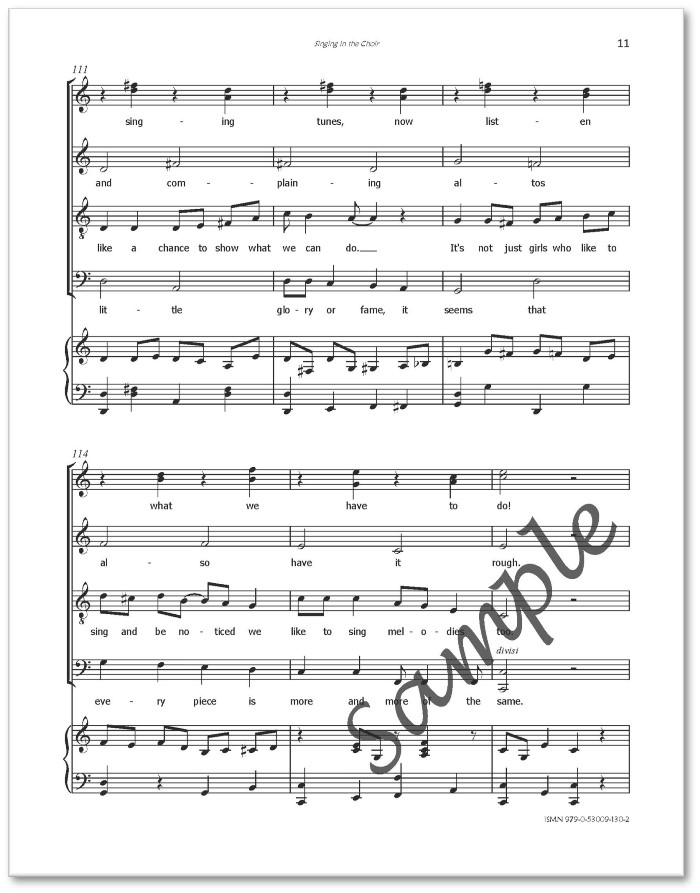
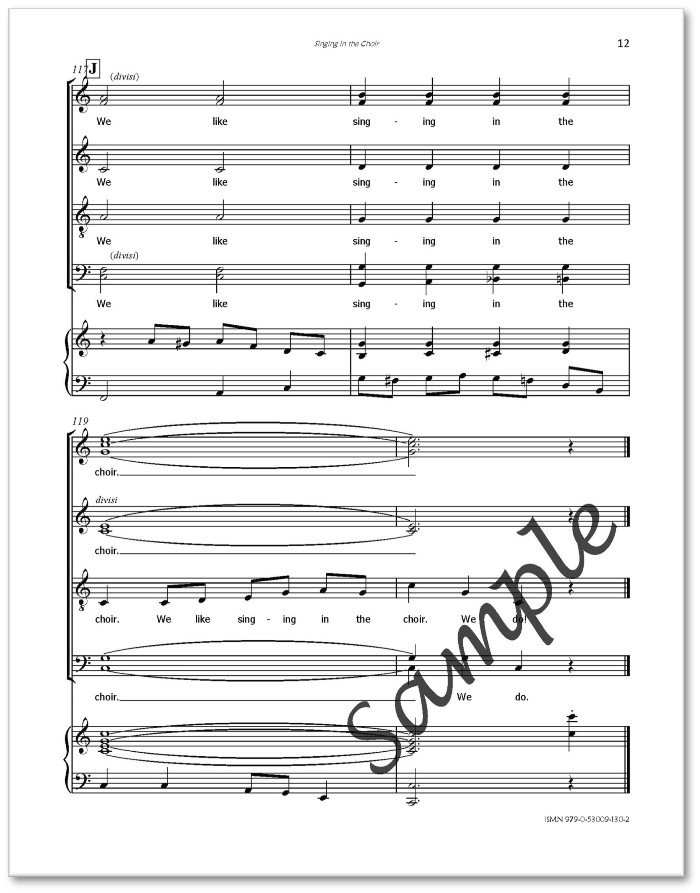
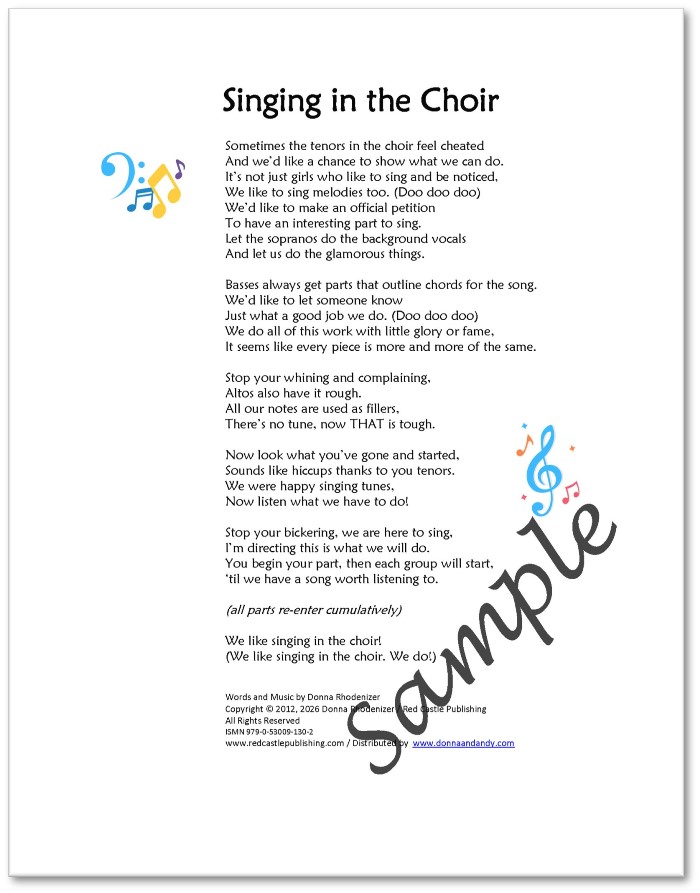
This humorous song gives each section of the choir the chance to explain what they contribute to an SATB choir. This includes some (legitimate) griping about typical ways music is often written for their section within the overall piece.
Singing in the Choir features a starring role for the tenors (who often feel overlooked), grumbling from the basses who feel their part is always the same, altos who admonish the others not to complain because at least their parts are not boring like the alto line, and the sopranos who are unhappy with the tenors who have stolen the melody and left the sopranos with a part that sounds like hiccups! There is even an optional part for the director to sing, encouraging the choir members to work together to create a cooperative choral presentation.
All performers (including the collaborative accompanist) have an important role to play in creating the final successful performance of this song. The individual parts may seem deceptively simple, but this song requires concentration! Singing in the Choir is lots of fun for performers and the listening audience.
Included in the download is a melody guide track which provides singers the opportunity to hear the melodic line for their section. As the song progresses, each part is added back in cumulatively. At the point in the melody guide track where the parts are all added back in, only the tenor line (the melody of the song) is played.
Listen to this Sample of accompaniment – with melody guide :
Download Includes:
- Director/piano score
- Accompaniment – with melody guide
- Accompaniment – piano
- Director’s notes
- Lyrics
Share this page using these social links!
Singing in the Choir
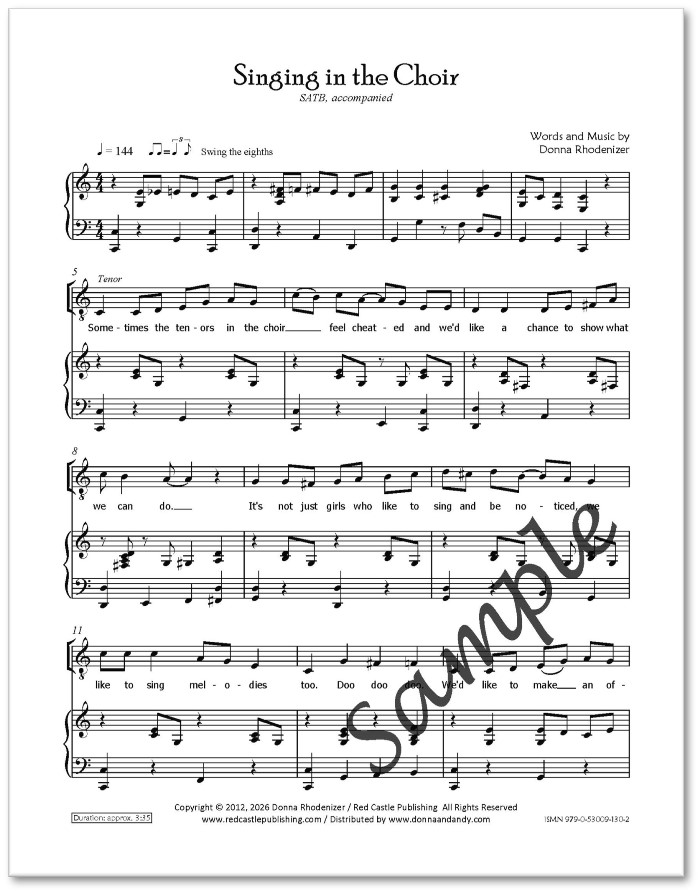
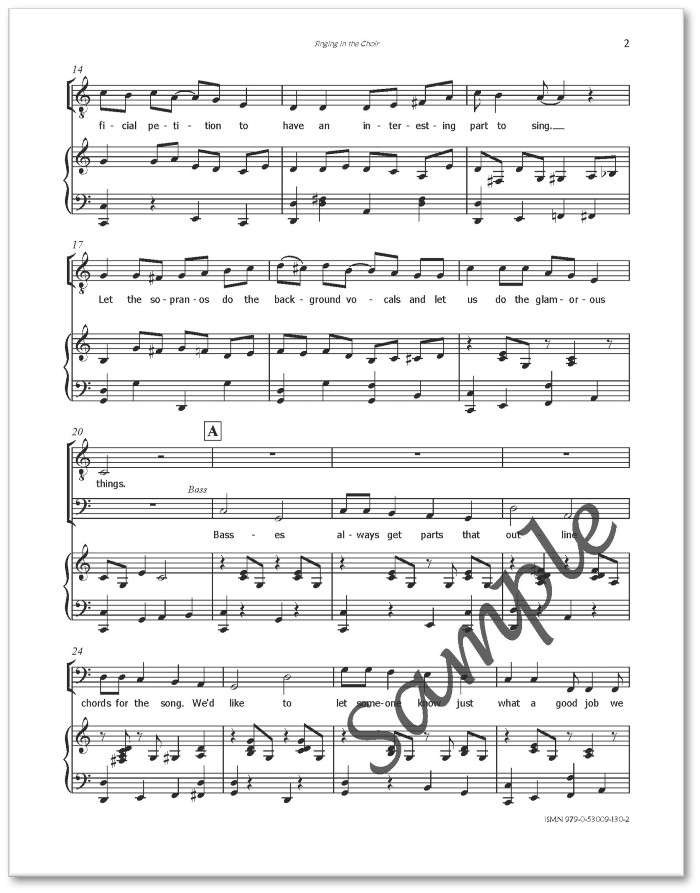
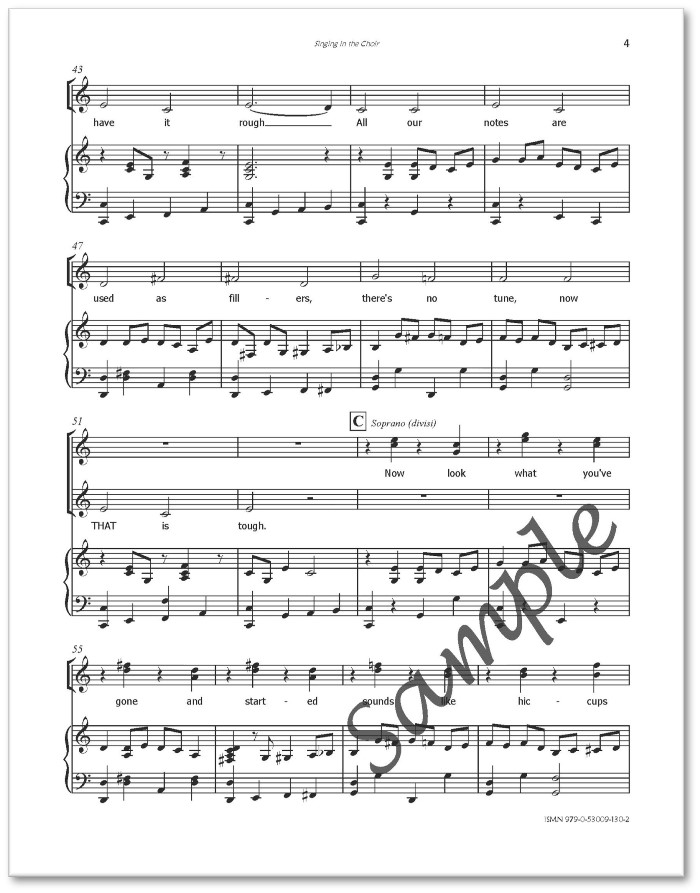
Listen to this piano and melody guide for Singing in the Choir as you follow along with the vocal score. Watch the video to hear all parts combined in the second half of the song.


Singing in the Choir
Choristers will be tempted to push the tempo as they sing the lilting feel of swung eighths. Speed is not recommended! When adding all the parts together, excessive speed will create issues.
The choir director may opt not to sing the section between Rehearsal letter D-E. When omitting this section, proceed from bar 68 directly to bar 77.
The soprano part is extremely challenging. Have the sopranos sing lightly and listen carefully for the downbeat of each bar so the off-beat quarter notes stay steady and landing in the right spots.
Sopranos are encouraged to sing the word “tenors” with derisive attitude. After all, it is the tenors who have stolen the limelight and the melody that is usually assigned to the sopranos!
Invite each section to sing with attitude and dramatic presentation to add expressiveness to the humour of the song.
Included in the download is a melody guide track which provides singers the opportunity to hear the melodic line for their section. As the song progresses, each part is added back in cumulatively. At the point in the melody guide track where the parts are all added back in, only the tenor line (the melody of the song) is played.
I was thinking about the makeup of the SATB choir and the kinds of parts that seem to be typical when choral pieces are written for an SATB ensemble. I started out with an idea that tenors might be miffed at only having parts that are in the middle of the harmonic fabric of a song. Maybe they would like to have the opportunity to sing the tune once in a while. The bouncy tune (swinging the eighths) and the complaint of the tenors “It’s not just girls who like to sing and be noticed, we like to sing melodies too!” set the tone for the piece and I was off to the races! By deconstructing (or constructing) the elements that go into harmony parts, it was fairly simple to outline the chord changes with the bass part, and to fill in the inner harmonies with the alto line. Each part got to sing about their issues with this kind of stereotypical writing, so the text fell into place easily as well. Finally, the only part that was left was the soprano line.
Sopranos often have the beautiful, soaring melody line in choral pieces. In this case, the melody had already been handled by the tenors so, in a fairly complete role reversal, the soprano line became a series of short, high notes, sung on off beats, that were points of colour on top of the rest of the harmonies. It wasn’t my intention to create such a difficult part for the sopranos to sing, but it really turned out that way. Maybe it was because I have never really sung soprano in a choir. Early in my ensemble singing experience it was discovered by my music teachers that I had the ability to sing solid harmony parts, and I was quickly assigned to sing alto. I must hasten to include here that I do not harbour any ill will toward sopranos, but it would not be a stretch to sing this particular piece and to wonder about my motives! The only thing I can think of to assuage the misgivings of sopranos is to turn their attention to songs like The Love of the Sea or I Will Be There to discover that I do like to write lovely melody lines for sopranos to sing.
As I continued crafting the remaining elements of Singing in the Choir, I thought it would be fun to add a part for the director who would admonish the choir to cooperate with each other and to sing all their parts to create a cohesive piece of music. After this entreaty by the director, the tenors begin singing their part and each section is added cumulatively as the song progresses. The piano also plays a collaborative role. As the song progresses the piano accompaniment becomes more and more sparse, allowing the complexity of multiple parts and lyrics to unfold without being masked by the piano. However, when the full piano part returns, listeners will hear how the foundational accompaniment also has an important part to play in the overall presentation. Each part does indeed have an important role in creating a successful performance and the final conclusion is reached, “I like singing in the choir!”
This was a fun song to write and when it was completed, I was delighted when director, Ross Thompson programmed Singing in the Choir for a concert performed by the Cantabile Singers of Truro. They did a super job of hamming up the bickering between the sections and of course, fine singing was also part of the fun performance.
When you have enjoyed singing this song with your students - please drop by again and leave a Review on this page. Thanks!
Please send us your performance video - we might be able to post it on this page!
"Fun and easy for an amateur choir. A great way for any level to break down any preconceived ideas about choirs taking themselves seriously. "
Dawn Harwood-Jones
Director, 3 Choirs
Send us your video of Singing in the Choir and perhaps we can post it here.

| License | Small Ensemble License, Small Choir License, Large Choir License |
|---|---|
| Context | Choir – High School, Choir – Community, Choir Repertoire, Novelty, Choir – SATB |
| Topic | |
| Level | |
| Voicing | |
| Duration | |
| Composer | Donna Rhodenizer |
Dawn Harwood-Jones –
My 40 piece choir had a “hoot” with Singing in the Choir. It helps break the ice if your audience is a bit shy and pretty easy to learn… Not to mention it is funny. The sopranos might not forgive you, though, but they certainly quote the song every time they get a chance LOL